Java Vulnerabilities, October 2026: Security Alerts and Fixed Versions
Contents12
On 21 October 2026 Japan's Information-technology Promotion Agency (IPA) issued an alert, "Oracle Java の脆弱性対策について(2026年10月)" (Oracle Java vulnerability countermeasures, October 2026). It follows Oracle's quarterly security update and urges organisations to update promptly, because the impact of an attack could be serious.
Update, 13 November 2026: Oracle has issued two further Security Alerts
After the 20 October quarterly update, Oracle issued Security Alerts for problems with certificates from eMudhra, an Indian certificate authority: CVE-2026-91403 on 21 October and CVE-2026-114820 on 24 October, both rated CVSS 9.1. Updating to the 20 October releases (such as 21.0.13) is not enough. You need the 24 October releases (such as 21.0.13.0.3) or later. OpenJDK builds such as Eclipse Temurin are affected too. Oracle's next update is scheduled for 17 November (US time). See "The extra alerts and the versions to install now" below.
Key takeaways
- Find out which Java, and which version, runs on your systems and PCs.
- Update to the latest release (or ask your developer to). Older versions not in the list are likely affected too.
- Oracle JDK 21 updates from 21.0.13 are no longer free for production use. Choose between a paid subscription, moving to Java 25, or switching to an OpenJDK build.
- IPA's alert is a recommendation, not a legal duty. But leaving a system that handles customer data unpatched is a serious risk.
55
Java SE fixes
49
exploitable remotely without logging in
7
Java lines listed by IPA (8 to 27)
Two terms in plain words
Java is a platform for running business systems and web services. It is widely used in Japanese companies, from banking and logistics to in-house systems.
A vulnerability is a weak spot in software that an attacker could use to break in.
The extra alerts and the versions to install now (updated 13 November 2026)
After the 20 October Critical Patch Update (CPU), Oracle issued two further Security Alerts for Java. Oracle uses Security Alerts for fixes too important to wait for the next scheduled update. Both concern certificates from eMudhra, a certificate authority (a company that issues digital certificates) based in India.
According to Oracle, the private keys of eight eMudhra intermediate CA certificates have been compromised, meaning that someone else may know them. In general, a certificate like this could be misused so that Java accepts a server impersonating the real one as genuine. Oracle rates both alerts CVSS 9.1, remotely exploitable over a network without logging in.
- Quarterly Critical Patch Update: 55 Java SE fixes; 21.0.13, 17.0.21 and others released
- Security Alert CVE-2026-91403. Releases such as 21.0.13.0.2 stop trusting eight eMudhra intermediate CA certificates and eight certificates cross-signed by Sectigo. The 20 October releases are among the affected versions
- Security Alert CVE-2026-114820. Releases such as 21.0.13.0.3 remove four related root certificates from Java's certificate store (cacerts)
- Oracle Database and other Oracle products that bundle Java are added to the CVE-2026-114820 alert
- Next scheduled update (Critical Security Patch Update). The pre-release announcement lists 11 Java SE fixes
Latest Oracle JDK releases (as of 13 November 2026)
These are the latest release in each line, checked against Oracle's release notes and download page. All were released on 24 October and include the fixes for both alerts.
| Line | 20 October release | Install now | Licence for updates |
|---|---|---|---|
| Java 25 (LTS) | 25.0.5 | 25.0.5.0.3 | NFTC (free, including in production) |
| Java 21 (LTS) | 21.0.13 | 21.0.13.0.3 | OTN (production use generally needs a paid contract) |
| Java 17 (LTS) | 17.0.21 | 17.0.21.0.3 | OTN |
| Java 11 (LTS) | 11.0.33 | 11.0.33.0.3 | OTN |
| Java 8 | 8u511 | 8u511 (build b33) | OTN |
| Java 27 | 27.0.1 | 27.0.1.0.3 | NFTC |
Note: the 21 October releases (ending in .0.2, or b32 for Java 8) only fix the first alert. Compare the version that java -version prints with the table above.
Note: Java 26 is not on the affected-versions list of either alert. Oracle's release notes index already lists Java 26 under sustaining support, the phase in which no new fixes are released. If you use Java 26, plan a move to Java 27 or an LTS release.
OpenJDK builds (Eclipse Temurin and others) are affected too
The OpenJDK project tells users of standalone OpenJDK runtimes to act even if they updated in the past few days. The preferred fix is the vendor's updated runtime, whose release notes should list the fix for JDK-8395690 (CVE-2026-114820).
- Eclipse Temurin: the fixed releases are 17.0.21+9, 21.0.13+9, 25.0.5+8 and 27.0.1.0.2+1. Temurin builds its certificate store from Mozilla's list, and Adoptium says its October releases drop the relevant root certificates (it keeps emSign Root CA - G1 because Mozilla still trusts it). Java 8 and 11 came later: 8u512-b09 and 11.0.33+10 were published on 4 November, and their release notes include JDK-8395690.
- Other vendors (Amazon Corretto, Azul, Microsoft, Red Hat and others): we have not checked each one for this article. Check the vendor's release notes for JDK-8395690.
- Java installed from Linux packages usually uses the operating system's certificates. On Red Hat Enterprise Linux, Oracle Linux, Fedora and similar systems, updating the OS certificates (ca-certificates) is likely to be enough. On Debian and Ubuntu, updating the certificate packages is not enough. According to OpenJDK, you need to rebuild the Java certificate store as the superuser:
rm -f /etc/ssl/certs/java/cacerts
update-ca-certificates --fresh
If you cannot update straight away
Oracle and OpenJDK describe two stopgaps until you can install an updated release.
- Remove the relevant root certificates
Back up the Java certificate store (
lib/security/cacertsfor Java 11 and later,jre/lib/security/cacertsfor Java 8), remove the four entriesemsignrootcag1 [jdk],emsignrootcag2 [jdk],emsigneccrootcag3 [jdk]andcomodoaaaca [jdk]withkeytool -delete, then restart Java. Repeat for every Java installation. - Turn on certificate revocation checking
Add
-Dcom.sun.net.ssl.checkRevocation=trueand-Dcom.sun.security.enableCRLDP=trueto the command line of applications that use TLS.
The CheckCerts.java program published by Oracle and OpenJDK tells you whether a runtime is at risk. After removing certificates or updating, check in a test environment that outbound connections and signed JAR verification still work before changing production.
Next update: 17 November (18 November in Japan, expected)
Oracle's next update is scheduled for 17 November (US time). Its pre-release announcement lists 11 Java SE fixes, all of which may be exploited over a network without logging in, with a highest CVSS score of 8.1. The affected versions are the lines in the table above (8u511, 11.0.33, 17.0.21, 21.0.13, 25.0.5, 27.0.1). The details may change before the update is published.
In the release notes of the 24 October releases, Oracle says it does not recommend using them after the 17 November update. If you have not finished the October updates, install the current releases now, and be ready to apply the 17 November update quickly.
About IPA and JPCERT/CC
As of 13 November 2026, IPA's alert "Oracle Java の脆弱性対策について(2026年10月)" still shows only its 21 October posting, with no additions. We did not find an IPA or JPCERT/CC alert about the two extra Security Alerts in their alert lists. This section is based on official information from Oracle, OpenJDK and Adoptium (Eclipse Temurin).
What the IPA alert (October 2026) says
On 20 October 2026 (US time) Oracle published its quarterly Critical Patch Update (CPU). It contains 55 fixes for Oracle Java SE, 49 of which may be exploitable over a network without logging in.
IPA warns that exploitation could crash applications or let an attacker take over a computer. The versions IPA lists as affected are:
| Line | Versions listed as affected | Action |
|---|---|---|
| Java SE 27 | 27 | Update |
| Java SE 26 | 26.0.2 | Update |
| Java SE 25 | 25.0.4.1 | Update |
| Java SE 21 | 21.0.12.1 | Update |
| Java SE 17 | 17.0.20.1 | Update |
| Java SE 11 | 11.0.32.1 | Update |
| Java SE 8 | 8 Update 503, 8 Update 503-perf | Update |
Older versions are not safe either
Oracle does not test versions that are out of support, but says that older versions are likely affected by the same vulnerabilities.
IPA's alert is a recommendation, not a legal requirement. Still, if a system handles customer data, leaving it unpatched is a serious risk.
Five steps to check your Java and act
- Find out whether you use Java
It may be inside a business system, a web service or packaged software. If you are not sure, the quickest way is to ask your developer or maintenance provider: "Do we use Java? Which version?"
- Check the version and vendor
On a server or PC, the command
java -versionshows the version. "Java(TM) SE" means Oracle's build. "OpenJDK" usually means a build distributed by another vendor. - On PCs, use MyJVN
IPA's page also points to "MyJVN バージョンチェッカ" (MyJVN Version Checker), which checks the versions of software installed on a PC.
- On Oracle JDK, check the licence
If you use Oracle's Java 21 or similar at work, check the change to the licence for updates (next section).
- Update to the latest release
Check that everything works in a test environment, then update production. On PCs where nobody uses Java, removing it is the safest option.
Watch out: Oracle JDK 21 updates are no longer free for production use
This update also brings a licensing change. Based on Oracle's information, here is the path for a company that has been running Oracle JDK 21 in production for free.
Licence caveat
The OTN licence allows free personal use, development and testing, but production use in a business generally requires a paid Oracle subscription. Updates for Oracle JDK 8, 11 and 17 are already under the same OTN licence.
| Oracle JDK | Licence for updates | Production use in a business |
|---|---|---|
| 8, 11, 17 | OTN | Paid subscription, generally |
| 21 | NFTC up to 21.0.12, OTN from 21.0.13 | Paid from 21.0.13, generally |
| 25 | NFTC (updates until September 2028, planned) | Free |
NFTC (No-Fee Terms and Conditions) allows free use, including in production. OTN generally requires a paid subscription for production use.
Confirm the terms with Oracle
Check licence terms carefully. IPA itself advises asking Oracle directly about licensing and support.
Which path fits you?
Oracle subscription
Keep your current version and receive Oracle's updates.
Suits you if you cannot change versions quickly or need Oracle support.
Move to Oracle JDK 25
Free-use terms for longer (planned until September 2028).
Suits you if you are on 17 or 21 and can test the move.
Switch to OpenJDK
Use a free distribution such as Eclipse Temurin or Amazon Corretto.
Suits you if you want to keep costs down. Check the provider's support period too.
Doing nothing is not recommended
The fixes are not applied, and the weaknesses stay open.
Oracle Java support dates
Oracle's paid support periods are below. The versions used for the long term are the "LTS" (long-term support) releases.
| Version | Premier Support | Extended Support |
|---|---|---|
| Java 8 | Ended March 2022 | Until December 2030 |
| Java 11 | Ended September 2023 | Until January 2032 |
| Java 17 | Ended September 2026 | Until September 2029 |
| Java 21 | Active until September 2028 | Until September 2031 |
| Java 25 | Active until September 2030 | Until September 2033 |
These periods apply if you have an Oracle contract. Without one, the licensing points above also apply.
The key dates on a timeline:
- Java 17 Premier Support ends. The last Oracle JDK 21 update under the free NFTC terms is 21.0.12
- Oracle publishes its Critical Patch Update: 55 Java SE fixes. Oracle JDK 21 moves to the OTN licence from 21.0.13
- IPA issues its alert on Oracle Java
- Java 21 Premier Support ends. Free NFTC updates for Oracle JDK 25 are planned to end
- Java 17 Extended Support ends
- Java 8 Extended Support ends
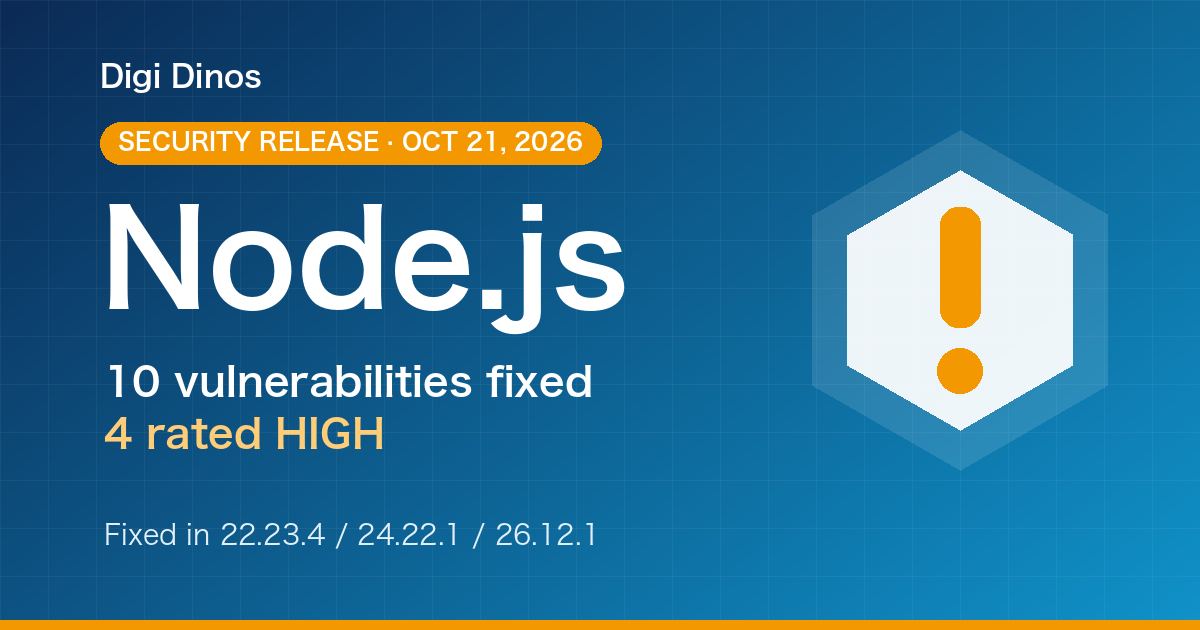
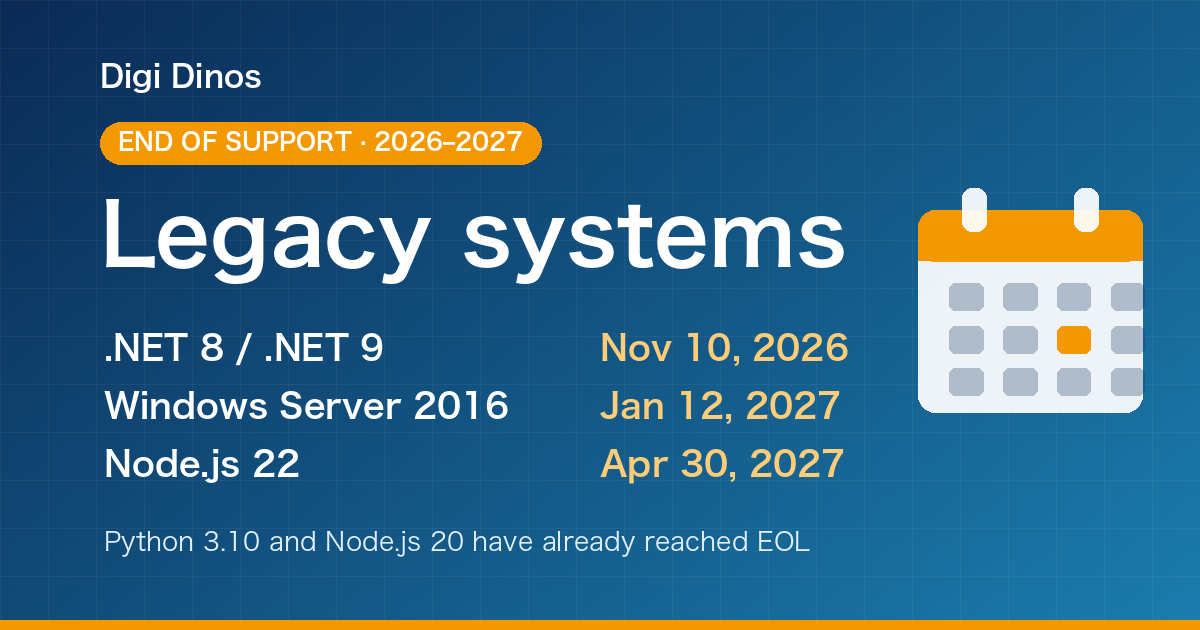
Support dates for Node.js, Python, .NET and server operating systems are collected in our guide to securing legacy systems. For the Node.js update of the same week, see the Node.js security release.
What upgrading from Java 8 or 11 involves
An update within the same line (e.g. 21.0.12 → 21.0.13) is a relatively small job. Moving from Java 8 to 17, 21 or 25 can take more work, for these reasons:
Removed features
Java 11 dropped Java Web Start and some standard modules such as JAXB.
Frameworks must move too
Spring Boot 3, for example, needs Java 17 or later, and package names changed (javax → jakarta).
Testing is needed
Screens, reports and links to other systems all need checking so everyday work runs as before.
Time and cost vary widely with the size and age of the system, so start with an assessment to see the whole picture.
Leave it, or act?
If you leave it as it is
- The 55 fixes are not applied and the weaknesses stay open
- On an old Oracle JDK 21 release, you receive no further fixes
- You end up investigating in a hurry after something happens
If you check version and licence, then act
- This round of fixes closes the weaknesses
- You keep running in production with no licence worries
- The next upgrade can be planned calmly
Questions to ask your developer or maintenance provider
- Which vendor's Java, and which version, does our system use?
- When can you apply the October 2026 update?
- If we use Oracle JDK, is our current licence still fine?
- How much work would moving to Java 25 or OpenJDK be?
- Are any of our frameworks or libraries out of support?
Common situations
The builder cannot be reached
First check that you hold the source code, server logins, and domain and cloud account details. With these, another company can take over and investigate.
No documents, no one knows
This is common with long-running Java systems. Reading the code shows what the system does, and the features and business flows can be documented again.
The person in charge has left
Simply noting which screens are used, by whom and for what work makes a handover much smoother.
How Digi Dinos can help
Digi Dinos is a software company with offices in Vietnam and Japan. Over eight years we have delivered more than 150 projects, with a Japanese-speaking team.
- Taking over maintenance of existing systems in all major stacks: Java, Node.js, PHP, Python, Ruby, .NET and more.
- Fixing newly published vulnerabilities: when an update like this one appears, we check the impact and apply the fix.
- Full upgrades: Java version, framework, server and operating system.
- No documentation? No problem. Even when the original vendor has gone and nobody understands the business logic, we read the code, rebuild the documentation and propose a complete plan.
- Lifetime warranty: if a defect turns up in anything we worked on, we fix it, with no end date for as long as your maintenance contract continues.
Not sure where your Java stands? Just ask.
From checking version and licence to moving to Java 25 or OpenJDK and planning an upgrade, we guide you in plain terms.
FAQ
Java is installed on a PC but nobody uses it. Do we need to act?
If it is not used, removing it is the safest option. If it is used for work, update it to the latest release.
We use Oracle JDK 21. Do we need a subscription right now?
Releases up to 21.0.12 that you already have stay under their original terms. But to apply this fix (21.0.13 or later) you need a subscription, a move to Java 25 or a switch to an OpenJDK build. Confirm the details with Oracle.
Will our system still work on OpenJDK?
In most cases it runs as is, but to be safe we test in a separate environment before switching production.
How much will it cost?
It depends on the size and age of the system, so we assess it first and then quote.
Sources
- IPA, "Oracle Java の脆弱性対策について(2026年10月)"
- Oracle, "Critical Patch Update Advisory - October 2026"
- Oracle, "Oracle Java SE Support Roadmap"
- Oracle, "Oracle Java SE Licensing FAQ"
- Oracle, "Security Alert Advisory - CVE-2026-91403"
- Oracle, "Security Alert Advisory - CVE-2026-114820"
- Oracle, "Critical Security Patch Update Pre-Release Announcement - November 2026"
- Oracle, "JDK 21.0.13.0.3 Release Notes"
- Oracle, "eMudhra Intermediate Certificates in Oracle JDK"
- OpenJDK, "Compromised Certificates and OpenJDK Java Runtimes"
- Adoptium, "October 2026 Eclipse Temurin releases address the eMudhra CA compromise"
Related articles
Check Point CVE-2026-123039: Exploited with PHP2Shell
Microsoft 365 Outage, November 2026: Cause and Recovery
Microsoft November 2026 Updates: Exploited Outlook Flaw and KBs
OpenSSH CVE-2026-123158: Alpine Login Bypass and What to Do
Japan Data Breaches, Early November 2026: A Summary
Arara Message Breach Update: About 81 Million Email Addresses
SonicWall SSLVPN CVE-2026-19868: MFA Bypass and What to Do
Apache Tomcat Vulnerabilities, October 2026: 8 Flaws and Fixes
.NET 8 and 9 End of Support on 10 November 2026: What to Do
Movable Type Vulnerability JVN#91153973: Update or Mitigate Now
WordPress CVE-2026-119977: Listed as Exploited, Update Now
Japan Data Breaches, Oct–Nov 2026: What Companies Should Check
Ivanti Connect Secure Zero-Days: Update Again and Investigate
GitLab CVE-2026-97229 (CVSS 10): Exploited, Patch Now

Linux Kernel Fragnesia (CVE-2026-46300): Exploited, Patch Now
Brotli Vulnerability CVE-2026-111497 (HTTP2Shell): What to Do
PHP Vulnerability CVE-2026-109618 (PHP2shell): What to Do Now
PHP Upgrade Cost: Moving From PHP 5 or 7 to PHP 8
Taking Over a Legacy System With No Documentation
Node.js Security Release, October 2026: What to Do
Securing Legacy Systems: Where to Start (2026 EOL Guide)

Superior Features of ChatGPT 4o (4 Omni)

What Is Digital Transformation? Definition, Roadmap and Examples

The Secret to Happiness!

What Is an IT Comtor? Role, Skills and How It Differs from a BrSE