Check Point CVE-2026-123039: Exploited with PHP2Shell
Contents10
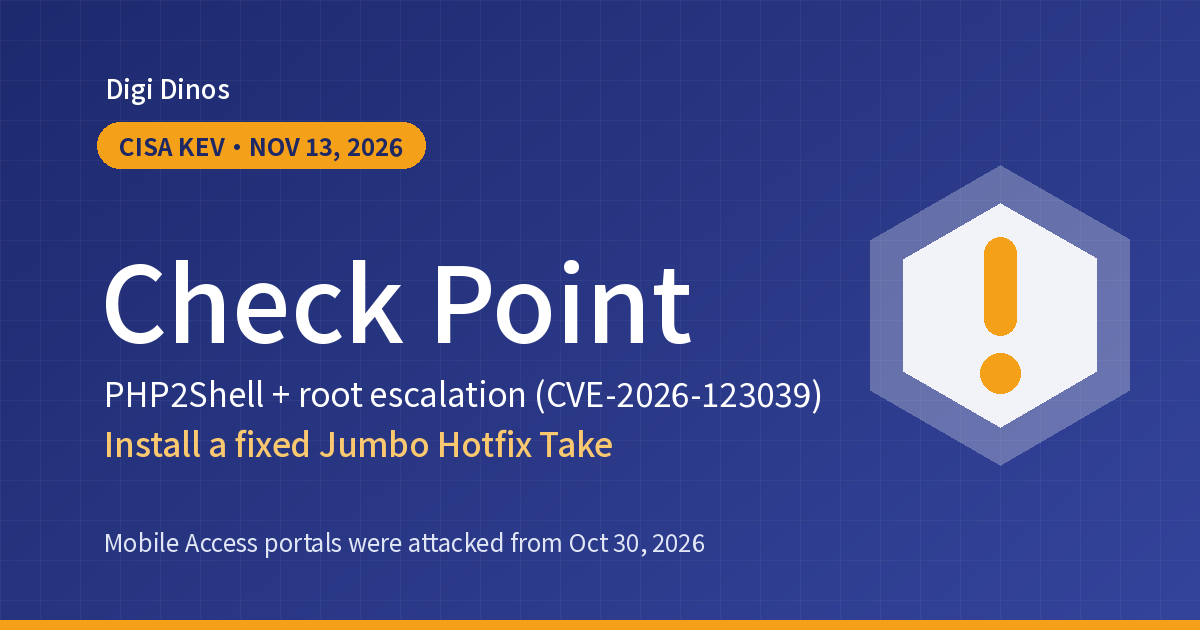
On 12 November 2026, Check Point announced that CVE-2026-123039, a vulnerability in Gaia OS, the operating system of its firewall products, has actually been exploited. According to the company's research team, the attackers first got into the VPN portal (Mobile Access) through the PHP vulnerability "PHP2Shell", and then used CVE-2026-123039 to take the highest privileges (root) on the device. On 13 November, the US CISA added this vulnerability to its list of "known exploited vulnerabilities".
This article is for companies that use Check Point firewalls. It explains the affected versions, the fixed releases (Jumbo Hotfix), workarounds for when you can't update right away, and how to look for signs of an intrusion. If your devices do not yet have the October PHP2Shell fix, check them with particular urgency.
Key takeaways
- Since 30 October 2026, attacks targeting Check Point gateways that have not been updated have been observed.
- The way in is PHP2Shell (CVE-2026-109618 and 109619), and the privilege takeover that follows is CVE-2026-123039. You need to fix both together.
- The fixes are included in Jumbo Hotfix Take 14 or later for R82.20, Take 52 or later for R82.10, Take 132 or later for R82, and Take 174 or later for R81.20.
- R81 and R81.10, whose support has ended, are not in the list of fixed releases for CVE-2026-123039. You need a workaround and a plan to move to a newer version.
7.8
Severity of CVE-2026-123039 (CVSS)
9.2
Severity of PHP2Shell (2 issues) (CVSS)
20+
Customers hit, in Check Point's words "a couple of dozen"
Terms used here
Mobile Access = Check Point's VPN portal feature for getting into internal company systems from outside the company using a web browser.
PHP2Shell = the common name for the PHP vulnerabilities (CVE-2026-109618 and 109619) disclosed in October 2026. Products that have PHP built in are also affected.
root = the strongest privilege on a device, which lets you do anything on it.
Jumbo Hotfix = an update package from Check Point that bundles fixes for each version. The larger the "Take" number, the newer it is.
KEV = a list published by the US CISA of "vulnerabilities confirmed to have actually been exploited".
What is the attack, and why is it dangerous?
According to a report published on 12 November by Check Point's research team (Check Point Research), the attack went as follows.
- Getting into the VPN portal
The attackers get into the Mobile Access portal of a gateway that has not been updated, using PHP2Shell.
- Taking root privileges
From the portal's privileges, they use CVE-2026-123039 to become root.
- Staying in
They place a malicious program (a web shell) in the portal templates, and also keep a backdoor program running.
- Spreading inside the network
In some cases, they explored the internal network from the gateway and got into VMware ESXi (a platform for virtual servers) over SSH.
- Destruction
In some cases, a program that deletes files on ESXi (a wiper) was run.
CVE-2026-123039 itself is a problem that lets an attacker who can already run programs on the device become root. According to Check Point's explanation, an internal communication point on the device (/tmp/dynamic_socket) could be written to by anyone, and commands sent to it were run as-is with root privileges. On its own it cannot be used from outside, but when combined with PHP2Shell as in this case, the device may be completely taken over from the internet.
Exploitation status (as of 17 November 2026)
According to the Check Point Research report, the first wave of attacks (30 October) mainly targeted organisations in Israel, and some suffered destructive damage. The second wave (2 November) targeted organisations in several countries, and the report says no signs of destruction were found. The attacks began about one week after the PHP2Shell fix was released. As for who the attackers are, the company says the evidence does not allow it to assess "with high confidence" the true nature of the operation.
On 13 November, CISA added CVE-2026-123039 to the KEV list and required US federal agencies to respond by 16 November. Damage in Japan is not mentioned in the official information we could check. In the lists of alerts from IPA and JPCERT/CC, Japan's main security organisations (checked on 17 November), we did not find any alert covering this issue (CVE-2026-123039). Note that in its PHP2Shell alert (updated on 29 October), JPCERT/CC reported that signs of compromise had been reported in "a certain firewall product".
Affected products and versions
| Vulnerability | Affected | Affected versions |
|---|---|---|
| CVE-2026-123039 (taking root privileges) | Check Point Force Firewall, management servers and log servers, Multi-Domain Security Management, Maestro Orchestrator | R81, R81.10, R81.20, R82, R82.10, R82.20 |
| CVE-2026-109618 / 109619 (PHP2Shell) | Firewalls using any of the following features: Mobile Access portal, remote access VPN with SSL Network Extender, remote access VPN with SAML authentication, Identity Awareness captive portal, UserCheck portal, Zero Phishing | R81.20, R82, R82.10, R82.20 (R80 to R81.10 are also affected, as versions whose support has ended) |
※ According to Check Point, CVE-2026-123039 does not affect Spark Firewall or Smart-1 Cloud. PHP2Shell does not affect management servers or log servers, but Spark Firewall (R81.10.x, R82.00.x) is affected.
Fixed releases (Jumbo Hotfix)
Check Point's two notices (sk1000362 and sk1000302) say that the following Jumbo Hotfix releases and later include the fixes for both CVE-2026-123039 and PHP2Shell.
| Version | Jumbo Hotfix that includes the fixes |
|---|---|
| R82.20 | Take 14 or later |
| R82.10 | Take 52 or later |
| R82 | Take 132 or later |
| R81.20 | Take 174 or later |
| R81, R81.10 (support ended) | Not in the list of fixed releases for CVE-2026-123039 |
For PHP2Shell, there is also a standalone fix (Hotfix) separate from the Jumbo Hotfix, available from 23 October (GMT), or from 29 October for R81.10. The standalone fix requires a reboot. However, it does not fix CVE-2026-123039 on its own.
Five steps to check and respond
- Check the devices and versions
Check the version of each gateway and management server, and the Jumbo Hotfix Take installed. If you don't know who manages them, ask your reseller or maintenance company.
- Check which features you use
If the Mobile Access portal, SSL Network Extender, SAML authentication or similar features are enabled, they can be a way in for PHP2Shell. Deal with devices that can be seen from the internet first.
- Update to the fixed release
Back up the settings, then install the Take shown in the table above or later. In a cluster setup, update one device at a time, and confirm that you can connect to the VPN.
- Look for signs of an intrusion
Before and after the update, go through the checklist below. Updating does not remove backdoors that have already been placed.
- Plan the move off R81 and R81.10
Get by with the workarounds for now, while moving quickly to a supported version.
If you can't update right away
As a workaround for CVE-2026-123039, Check Point gives steps to stop the process that causes the problem (dynamic_server) and keep it from starting again (sk1000362).
- As described in the notice, run
dbset process:dynamic_serveranddbset :save - Once it is stopped, the Dynamic CLI commands (described in sk144112) can no longer be used
- For PHP2Shell, sk1000302 gives workaround steps for each type of device
- Stop any VPN portal you are not using, and if you do use one, restrict the locations that can connect to it as far as possible (a general measure)
Workarounds are not a substitute for updating. Before doing any work, always check Check Point's latest notices.
How to look for signs of an attack
Check Point's notices and research report include ways to check such as the following. All of them are done in Expert mode.
- Does /var/log/dynamicCli.log record any commands that are not in the usual fixed form (the form that uses CPprofile.sh)?
- After the fix, does the same log show "Rejected connection from unauthorized uid" (a blocked attempt to take privileges)?
- After the fix, does
ls -l /tmp/dynamic_socketshowsrw-rw----(0660)? - In the VPN portal template location, are there any .tpl files starting with zz, or challenge_render.tpl?
- Are there any files you don't recognise, such as /tmp/CPconfigdaemon, slot_CPconfigdaemon or /lib/libcpfwcommon.so?
- Are there unusual SSH connections from the gateway to internal servers such as ESXi?
If you find anything suspicious, save the logs and then consult a specialist company. Even if you find nothing, you cannot say for certain that no one got in. The approach to checking VPN devices is also explained in "What to Do About the Ivanti Vulnerabilities".
PHP2Shell is also spreading to "products that use PHP"
PHP2Shell is a vulnerability in PHP itself, but as in this case, devices and software that have PHP built in are also being targeted. For PHP on your own website or business systems, see "What to Do About the PHP Vulnerability". The situation for other products, including VPN devices, is also covered in "What to Do About the SonicWall Vulnerability".
Leave it, or act now?
If you leave it
- The device may be taken over through the VPN portal
- Attackers may use the gateway as a foothold to spread into your network
- Data on your virtual servers may be deleted
If you update and inspect
- Both the way in (PHP2Shell) and the privilege takeover are fixed
- Unneeded portals and features are cleaned up
- You can check whether there are signs of an intrusion
How Digi Dinos can help
Digi Dinos is a company that supports DX, security, and the operation and maintenance of systems. We are ISO 27001 certified, and we also handle server and cloud operations and monitoring 24 hours a day, 365 days a year (NOC). Our team works in Japanese.
- Asset inventory: we sort out which devices are running which versions and who manages them.
- Support for planning and carrying out updates: even for systems that can't be stopped, we decide the procedure and timing and move forward.
- Taking over monitoring and operations: we can also take over the operation of systems that were managed by another company.
Is your firewall safe? Even a simple question is welcome (free consultation).
From checking your devices to planning the update, with guidance in Japanese.
Frequently asked questions
We don't use Mobile Access. Do we need to update?
CVE-2026-123039 affects you whether or not you use Mobile Access. Also, other features such as SSL Network Extender, SAML authentication and the UserCheck portal can also be a way in for PHP2Shell. Update.
We installed the standalone PHP2Shell fix in October. Is that enough?
The standalone fix only covers PHP2Shell. To fix CVE-2026-123039, you need to install the Jumbo Hotfix shown in the table above. Also, someone may have got in before you installed the fix, so check for signs of an intrusion as well.
Has there been any damage in Japan?
As of 17 November 2026, the official information we could check makes no mention of damage in Japan. However, the second wave of attacks targeted several countries, and we cannot say that there is no undisclosed damage.
Sources (checked on 17 November 2026)
- Check Point, "sk1000362 - CVE-2026-123039 - Local privilege escalation to root in the DynamicCLI process via local world-writable control socket" (updated 12 November 2026)
- Check Point, "sk1000302 - Check Point Response to CVE-2026-109618, CVE-2026-109619, CVE-2026-115560" (updated 12 November 2026)
- Check Point Research, "PHP2Shell Exploitation on Check Point Gateway" (12 November 2026)
- CISA, "Known Exploited Vulnerabilities Catalog: CVE-2026-123039"
- JPCERT/CC, "Alert on Multiple Vulnerabilities in PHP (CVE-2026-109618, CVE-2026-109619)" (Japanese) (updated 29 October 2026)
Related articles
Microsoft 365 Outage, November 2026: Cause and Recovery
Microsoft November 2026 Updates: Exploited Outlook Flaw and KBs
OpenSSH CVE-2026-123158: Alpine Login Bypass and What to Do
Japan Data Breaches, Early November 2026: A Summary
Arara Message Breach Update: About 81 Million Email Addresses
SonicWall SSLVPN CVE-2026-19868: MFA Bypass and What to Do
Apache Tomcat Vulnerabilities, October 2026: 8 Flaws and Fixes
.NET 8 and 9 End of Support on 10 November 2026: What to Do
Movable Type Vulnerability JVN#91153973: Update or Mitigate Now
WordPress CVE-2026-119977: Listed as Exploited, Update Now
Japan Data Breaches, Oct–Nov 2026: What Companies Should Check
Ivanti Connect Secure Zero-Days: Update Again and Investigate
GitLab CVE-2026-97229 (CVSS 10): Exploited, Patch Now
Linux Kernel Fragnesia (CVE-2026-46300): Exploited, Patch Now
Brotli Vulnerability CVE-2026-111497 (HTTP2Shell): What to Do
PHP Vulnerability CVE-2026-109618 (PHP2shell): What to Do Now
PHP Upgrade Cost: Moving From PHP 5 or 7 to PHP 8
Taking Over a Legacy System With No Documentation
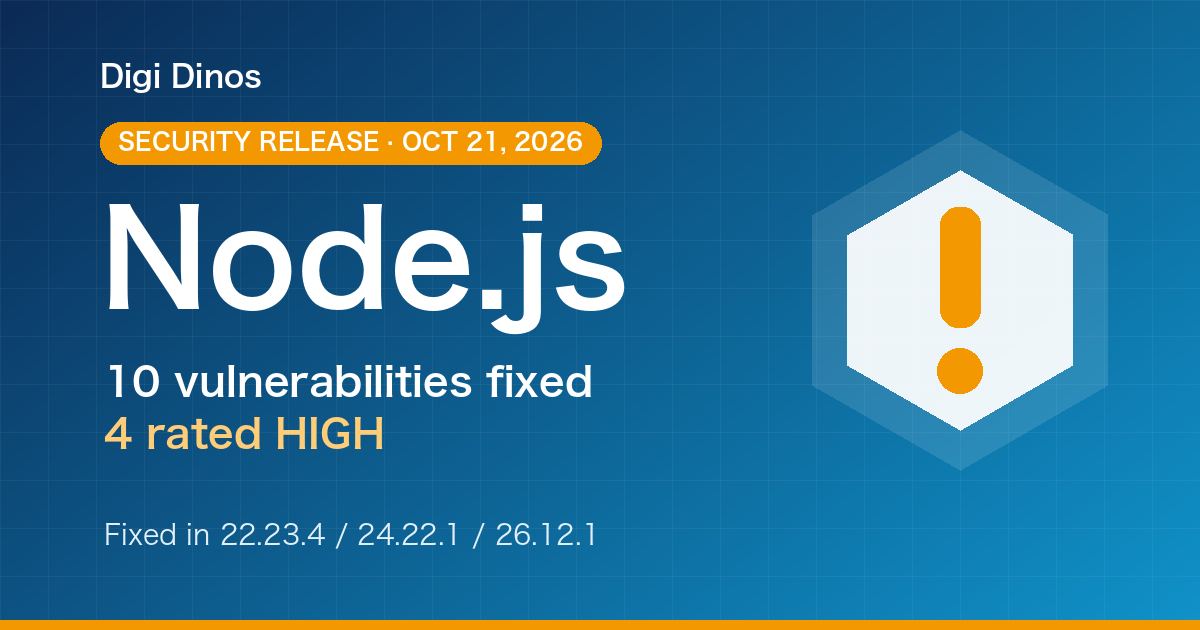
Node.js Security Release, October 2026: What to Do
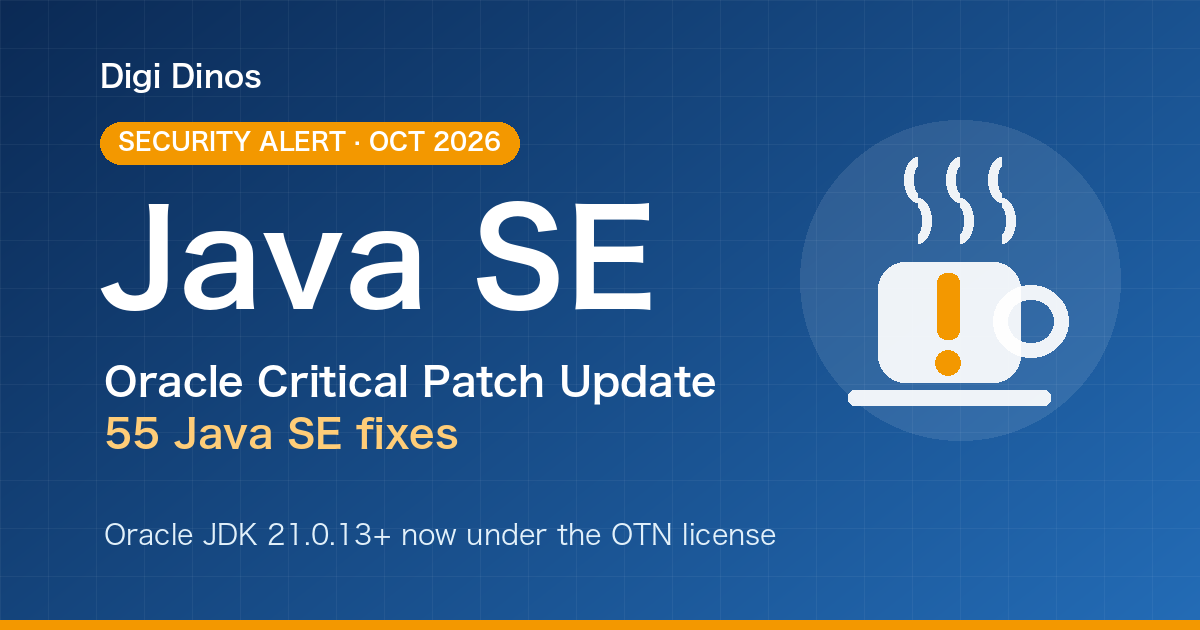
Java Vulnerabilities, October 2026: Security Alerts and Fixed Versions
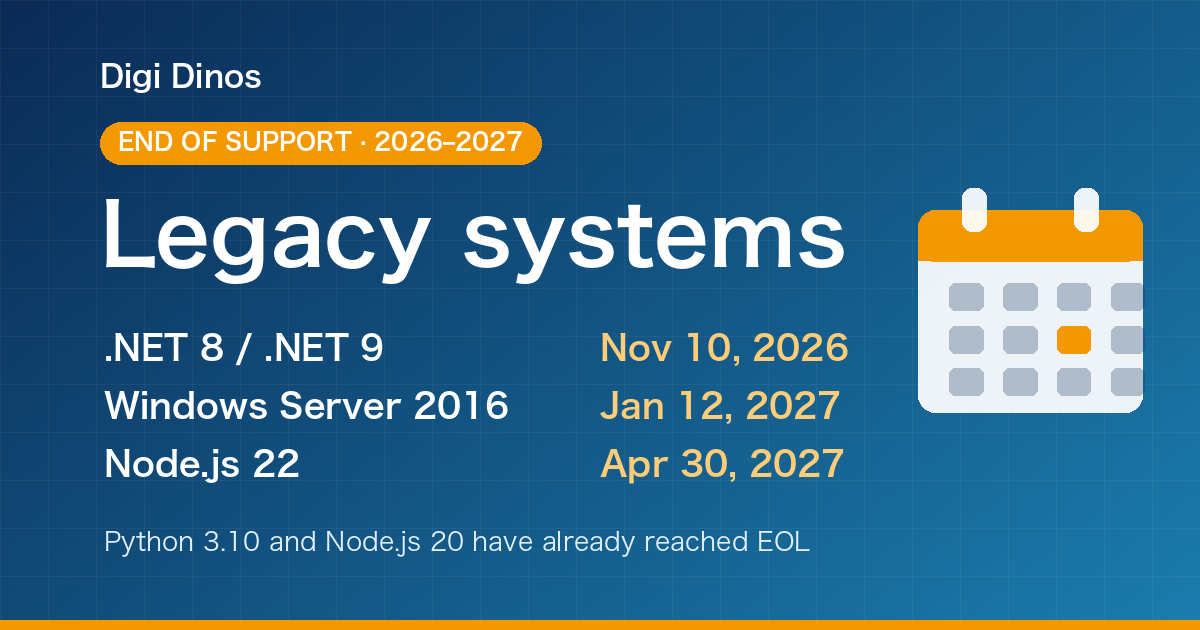
Securing Legacy Systems: Where to Start (2026 EOL Guide)
Superior Features of ChatGPT 4o (4 Omni)

What Is Digital Transformation? Definition, Roadmap and Examples

The Secret to Happiness!

What Is an IT Comtor? Role, Skills and How It Differs from a BrSE