Java4Shell (CVE-2026-114938): Who Is Affected and How to Fix It
Contents8
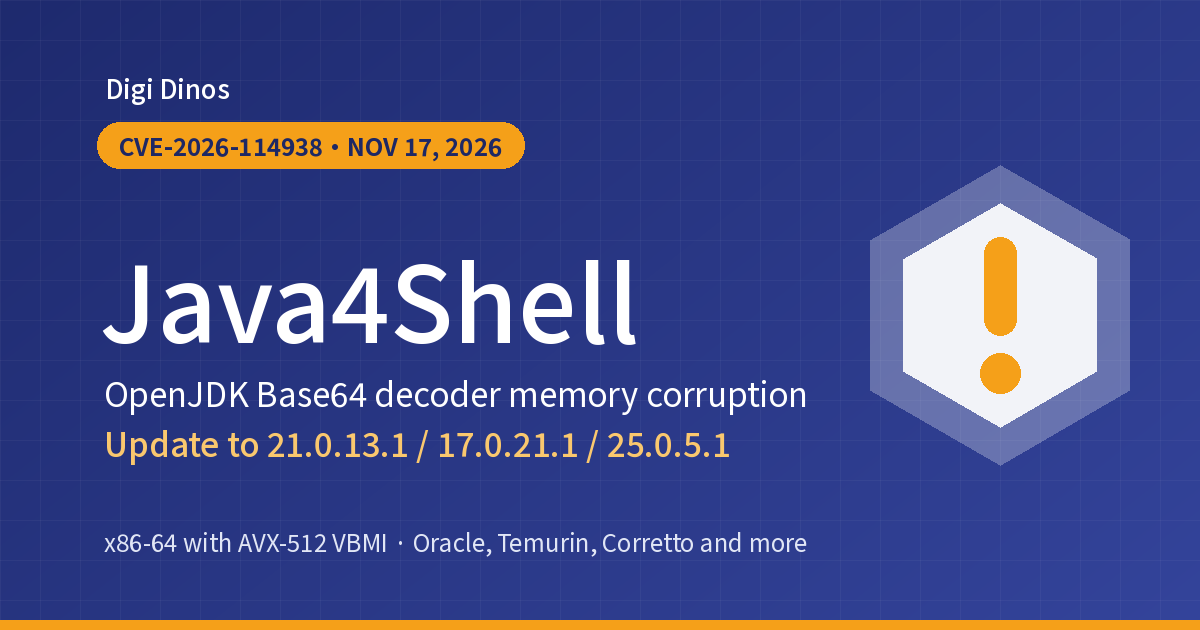
On 17 November 2026 (US time), CVE-2026-114938, a vulnerability in the Java runtime environment (OpenJDK), was disclosed. Calif, the security company that found it, named it "Java4Shell" and says it confirmed that in products such as Jira, Confluence, Jenkins and Keycloak, a server can be taken over without logging in. The US CISA called for immediate updates, and IPA also issued an "urgent" alert.
This article is for companies that use systems running on Java. It explains the conditions that make you affected, the fixed releases to install, and workarounds for when you can't update right away. Check not only the systems you built yourself, but also products that contain Java (such as Jira and Jenkins).
Key takeaways
- Java4Shell is a bug in the speed-up part of Java's Base64 handling (the process that turns data converted into text back into the original data). If Java is made to read a crafted string, memory gets corrupted.
- Affected versions include Java 17, 21, 25 and 27. In addition, the server's CPU must be x86-64 with AVX-512 VBMI support. ARM64 is not affected.
- Oracle JDK is fixed in the 17 November releases (21.0.13.1, 17.0.21.1, 25.0.5.1 and others), and Eclipse Temurin in the 18 November releases (21.0.13.1+2 and others).
- If you can't update right away, the finder shows a way to turn off the affected process with a startup option. However, this is not a substitute for updating.
9.2
Severity according to the finder (CVSS v4.0)
8.1
Severity according to Oracle and OpenJDK (CVSS v3.1)
6 products
Products where the finder confirmed a takeover without logging in
Terms used here
OpenJDK = the software that Java runtime environments are based on. Oracle JDK, Eclipse Temurin, Amazon Corretto and others are all built on OpenJDK.
Base64 = a rule for sending data such as images as a string made only of letters and numbers. It is used in many situations, such as login information and file uploads.
AVX-512 VBMI = instructions found in some CPUs for processing a lot of data at once. Java uses them to speed up Base64 handling.
Memory corruption = when a program overwrites memory outside the range it is allowed to use. If abused, attackers may be able to run any commands they like from outside.
What is the vulnerability, and why is it dangerous?
According to Calif's explanation, OpenJDK uses hand-written machine code (assembly) on supported CPUs to process Base64 quickly. There is a mistake in the part that handles the last few characters. A string of just 64 "A" characters followed by a single "=" makes it write 62 bytes past the end of the buffer that holds the result. Java does in the end treat this string as an error, but by then the surrounding memory has already been corrupted.
Java has been seen as a "memory-safe language", but Java itself has internal parts written in C and assembly, and this time the problem was there. Base64 is used in ordinary features that process data sent from outside, such as logins and file uploads, so the range of impact is wide.
Calif says it was able to run commands on the server in the following products, each with its default settings (it also notes that the list is not complete).
| Condition | Products (Calif's announcement) |
|---|---|
| No login needed | Keycloak, Atlassian Jira, Atlassian Confluence, JFrog Artifactory, Jenkins, PingFederate |
| Login needed | Apache Kafka (broker), Apache Solr, Elasticsearch, Gerrit, Spinnaker |
Calif says it also confirmed command execution in sample apps built with Apache Struts and Spring Boot. It also writes that another researcher shared an example where a Java program that connected to a malicious server over TLS (one that does not offer a public service) was taken over.
Exploitation status (as of 20 November 2026)
On 17 November, CISA issued an alert titled "Critical Java Vulnerability Requires Immediate Patching", asking organisations to install the fix right away, starting with systems exposed to the internet. However, CVE-2026-114938 is not in CISA's list of "known exploited vulnerabilities (KEV)" (the 20 November version), which we checked on 21 November. We did not find any mention of actual attacks in the official information we could check.
On the other hand, Calif has published a short program (PoC) to confirm that memory gets corrupted. Also, according to the company, an ordinary user reported this bug in a different form in June 2026, and a proposed fix was put forward in September (it was not merged at that time). Assume that information useful for attacks is already out, and update early.
Conditions that make you affected
You are affected by Java4Shell when both of the following conditions are met.
| Condition | Details |
|---|---|
| Java version | OpenJDK 17.0.6 or later (according to Calif). According to the OpenJDK advisory, Java 17, 21, 25 and 27 are affected, and 8 and 11 are not. According to Oracle's list, Oracle Java SE 17.0.21.0.3, 21.0.13.0.3, 25.0.5.0.3, 27.0.1.0.3 and 8u511b33-perf, GraalVM for JDK 17.0.21.0.3 and 21.0.13.0.3, and GraalVM Enterprise Edition 21.3.20.0.3 are affected. |
| CPU | x86-64 with AVX-512 VBMI support. Calif lists Intel Xeon Ice Lake, Sapphire Rapids, Emerald Rapids and Granite Rapids, and AMD EPYC and Ryzen Zen 4 or later. ARM64 CPUs are not affected. |
※ Calif says that OpenJDK-based builds such as Amazon Corretto, Eclipse Temurin, Microsoft Build of OpenJDK, Azul Zulu, BellSoft Liberica, SAP SapMachine and Red Hat's OpenJDK are also affected.
※ Cloud virtual servers are also affected if the CPU underneath is one of the generations above. On Linux, you can check with the following command given by Calif. If all four are shown, the CPU meets the condition.
grep -m1 '^flags' /proc/cpuinfo | tr ' ' '\n' | grep -E '^(avx512f|avx512bw|avx512vbmi|bmi2)$'
Fixed releases to install (as of 20 November 2026)
These are the fixed releases we confirmed in the official information from Oracle, Adoptium (the distributor of Eclipse Temurin) and Amazon (Corretto).
| Line | Oracle JDK (17 November) | Eclipse Temurin | Amazon Corretto (17 November) |
|---|---|---|---|
| Java 25 | 25.0.5.1 | 25.0.5.1+2 (18 November) | 25.0.5.1.2 |
| Java 21 | 21.0.13.1 | 21.0.13.1+2 (18 November) | 21.0.13.1.2 |
| Java 17 | 17.0.21.1 | 17.0.21.1+2 (18 November) | 17.0.21.1.2 |
| Java 27 | 27.0.1.1 | 27.0.1.1+4 (18 November) | (not checked for this article) |
※ The Temurin dates are the release times (UTC) we checked through the Adoptium API.
※ Java 8 and 11 are not affected by Java4Shell, but the updates released on the same day also fix other vulnerabilities (ones that affect lines including 8 and 11). For Oracle JDK, 8u513 and 11.0.33.1 have been released. For Temurin, 8u514-b01 (19 November) and 11.0.33.1+1 (20 November) have been released (checked in Adoptium's API on 21 November 2026). The November updates as a whole are explained in "Java Vulnerabilities, November 2026: Versions to Install".
※ We have not checked the releases from other distributors, such as Microsoft, Azul and Red Hat, one by one for this article. Please check each company's release notes.
Five steps to check and respond
- List where Java is running
Check not only your own apps, but also whether Java is inside products such as Jira, Jenkins and Elasticsearch, container images, and devices. CISA also warns that Java can be inside products and may not appear separately in an inventory.
- Check the version and the CPU
Check the version with
java -version, and the CPU condition with the command above. Deal first with servers that meet both. - Put services reachable from outside first
Update services that can be used from the internet first, especially the parts that run before login (authentication such as Keycloak, and products such as Jira).
- Update to the fixed release
After replacing Java, restart the app and confirm that it is running on the new version. For Java bundled with a product, follow the product vendor's guidance.
- Watch for suspicious activity
CISA advises watching for unexpected Java crashes and Java processes you don't recognise.
If you can't update right away
Calif says that adding either of the following to Java's startup options prevents Java4Shell.
-XX:-UseBASE64Intrinsics: turns off the Base64 speed-up that uses CPU instructions-XX:UseAVX=2: stops Java from using AVX-512. Use it only on x86-64 servers. Java on ARM does not know this option and will fail to start
Both may slow down processing, so test them in a test environment before applying them. CISA also lists checking Base64 input at the entry point, limiting input size, and limiting what can be used without logging in. These are a stopgap until you update, not a substitute for updating.
Leave it, or act now?
If you leave it
- The server may be taken over from the screen before login
- Memory contents (such as passwords) may be read
- Attackers may use Jira or Jenkins as a foothold to spread to other internal systems
If you update
- Java4Shell and the other vulnerabilities fixed on the same day are all fixed together
- You get a list of where Java is running, which makes the next update easier
- It is a chance to set up a way to handle updates every month
How Digi Dinos can help
Digi Dinos is a company that supports DX, security, and the operation and maintenance of systems. We are ISO 27001 certified, and we also handle server and cloud operations and monitoring 24 hours a day, 365 days a year (NOC). Our team works in Japanese.
- Java inventory: we sort out which version of Java is running on which servers and products.
- Updates and testing: we replace Java and check that apps work correctly, deciding the procedure and moving forward even for systems that can't be stopped.
- Taking over old systems: we can take over the operation and maintenance of Java systems even when the company that built them is no longer around.
Is your Java safe? Even a simple question is welcome (free consultation).
From checking versions to planning the update, with guidance in Japanese.
Frequently asked questions
We use Java 8 or Java 11. Does Java4Shell concern us?
According to the OpenJDK advisory, CVE-2026-114938 does not affect 8 and 11 (Oracle Java SE 8u511b33-perf is affected). However, the 17 November updates also fix vulnerabilities that affect 8 and 11, so you still need to update.
Are Macs or ARM servers (such as AWS Graviton) affected?
According to Calif, ARM64 CPUs are not affected. Macs with Apple silicon are also ARM. However, other vulnerabilities are fixed at the same time, so update anyway.
For products such as Jira, is it enough to replace just Java?
Depending on the product, Java is either bundled or the server's Java is used. If it is bundled, follow the fixed release or procedure from the product vendor. Replacing it on your own may put you outside the vendor's support.
Sources (checked on 20 November 2026)
- Calif, "Java4Shell: Write once, RCE everywhere" (17 November 2026)
- Oracle, "Critical Security Patch Update Advisory - November 2026" (Rev 1, 17 November 2026)
- OpenJDK, "Vulnerability Advisory: 2026/11/17"
- CISA, "Critical Java Vulnerability Requires Immediate Patching" (17 November 2026)
- IPA, "Countermeasures for Oracle Java Vulnerabilities (November 2026)" (in Japanese) (18 November 2026)
- Adoptium, "Eclipse Temurin" releases (checked via the API)
- Amazon Corretto 21 releases (GitHub)
Related articles
PHP Vulnerabilities, November 2026: 7 Critical Flaws and Fixes
GitLab Vulnerabilities, November 2026: Update to 19.6.1
NGINX Vulnerabilities: HTTP/2 RCE and Version 1.30.7
Check Point CVE-2026-123039: Exploited with PHP2Shell
Microsoft 365 Outage, November 2026: Cause and Recovery
Microsoft November 2026 Updates: Exploited Outlook Flaw and KBs
OpenSSH CVE-2026-123158: Alpine Login Bypass and What to Do
Japan Data Breaches, Early November 2026: A Summary
Arara Message Breach Update: About 81 Million Email Addresses
SonicWall SSLVPN CVE-2026-19868: MFA Bypass and What to Do
Apache Tomcat Vulnerabilities, October 2026: 8 Flaws and Fixes
.NET 8 and 9 End of Support on 10 November 2026: What to Do
Movable Type Vulnerability JVN#91153973: Update or Mitigate Now
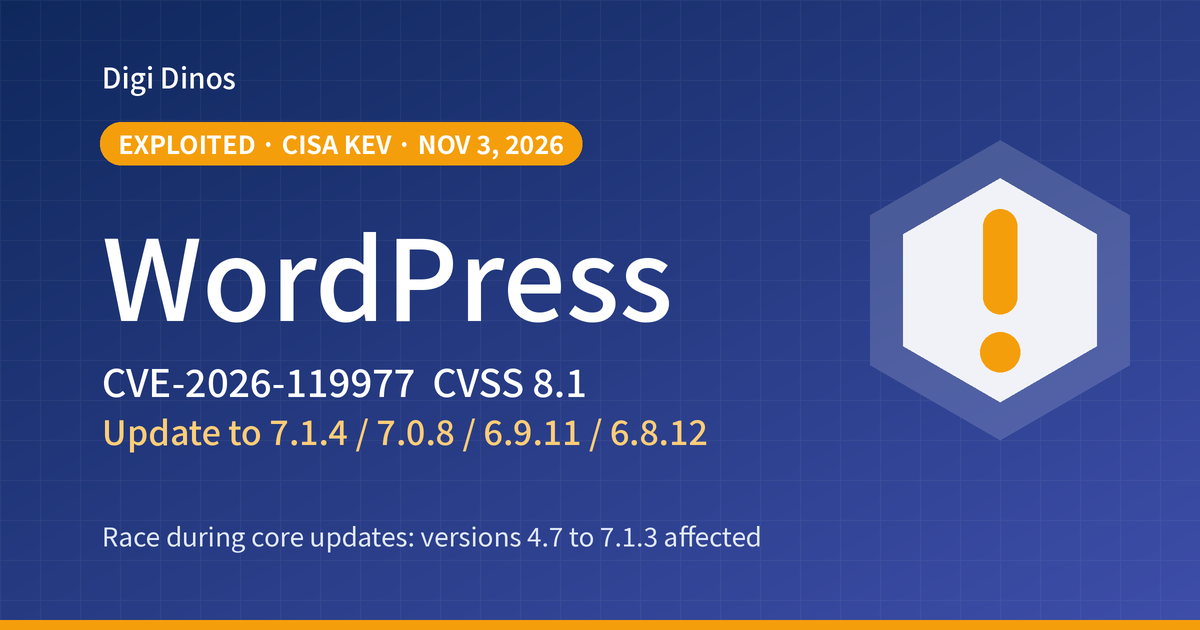
WordPress CVE-2026-119977: Listed as Exploited, Update Now
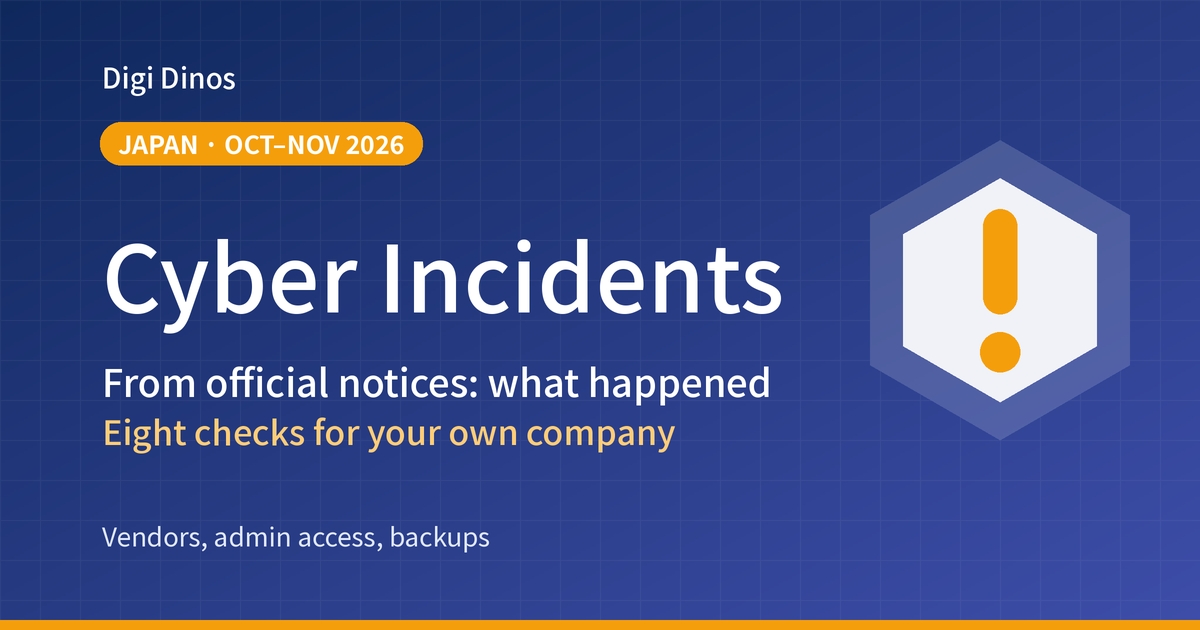
Japan Data Breaches, Oct–Nov 2026: What Companies Should Check
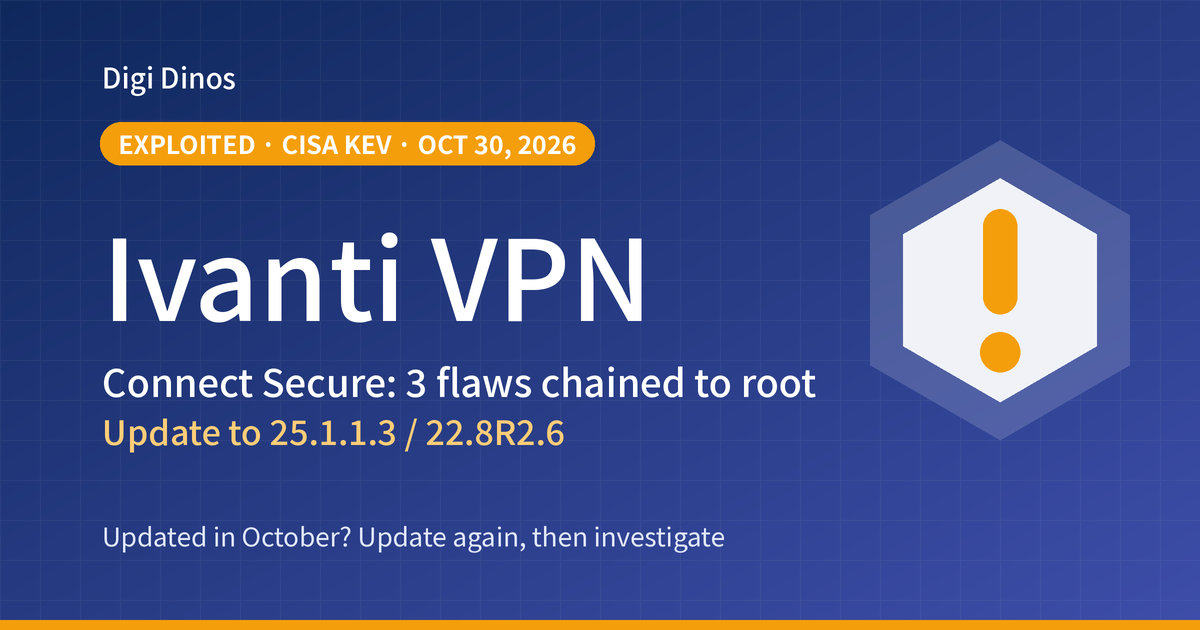
Ivanti Connect Secure Zero-Days: Update Again and Investigate
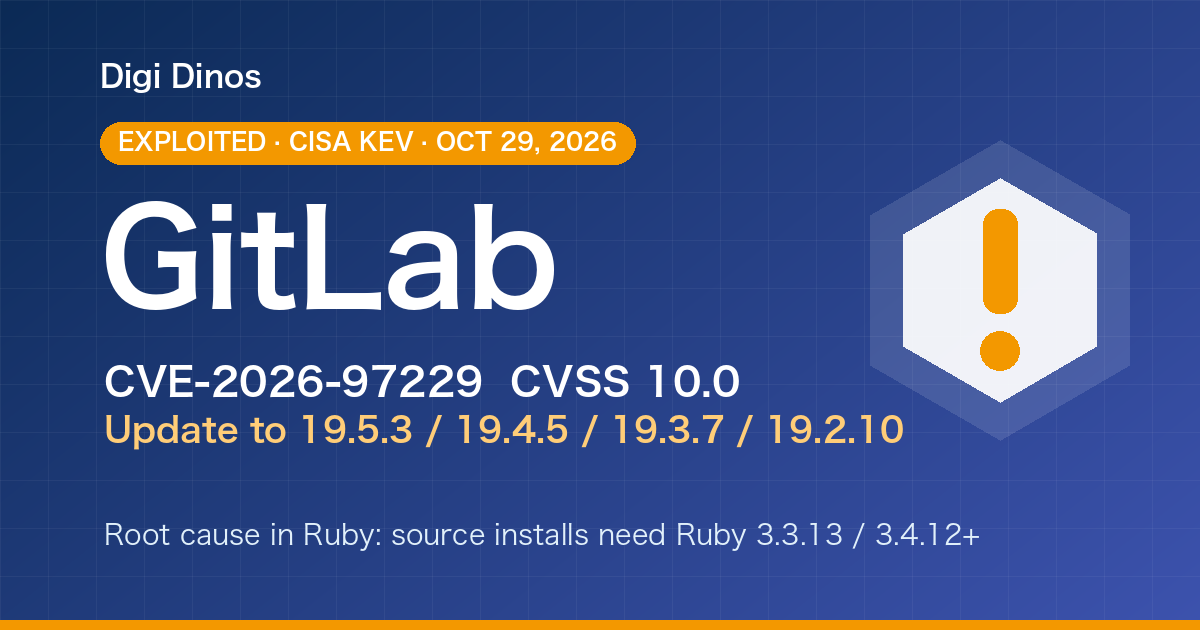
GitLab CVE-2026-97229 (CVSS 10): Exploited, Patch Now

Linux Kernel Fragnesia (CVE-2026-46300): Exploited, Patch Now
Brotli Vulnerability CVE-2026-111497 (HTTP2Shell): What to Do
PHP Vulnerability CVE-2026-109618 (PHP2shell): What to Do Now
PHP Upgrade Cost: Moving From PHP 5 or 7 to PHP 8
Taking Over a Legacy System With No Documentation
Node.js Security Release, October 2026: What to Do
Java Vulnerabilities, November 2026: Versions to Install
Securing Legacy Systems: Where to Start (2026 EOL Guide)

Superior Features of ChatGPT 4o (4 Omni)

What Is Digital Transformation? Definition, Roadmap and Examples

The Secret to Happiness!

What Is an IT Comtor? Role, Skills and How It Differs from a BrSE